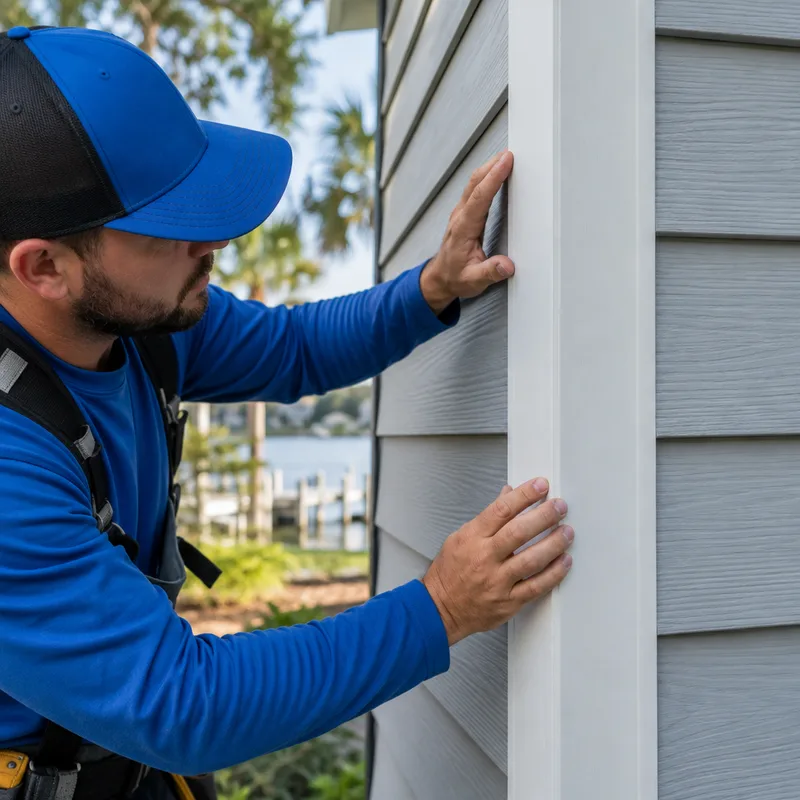
Straight layout and clean trim work
Courses are leveled, staggered, and finished with consistent reveals. Corners, J-channel, and lineals are cut and locked so the trim looks crisp up close, not just from the street.
Serving Jacksonville, Florida & surrounding areas
Mon–Fri 8am–6pm · Sat 9am–2pm
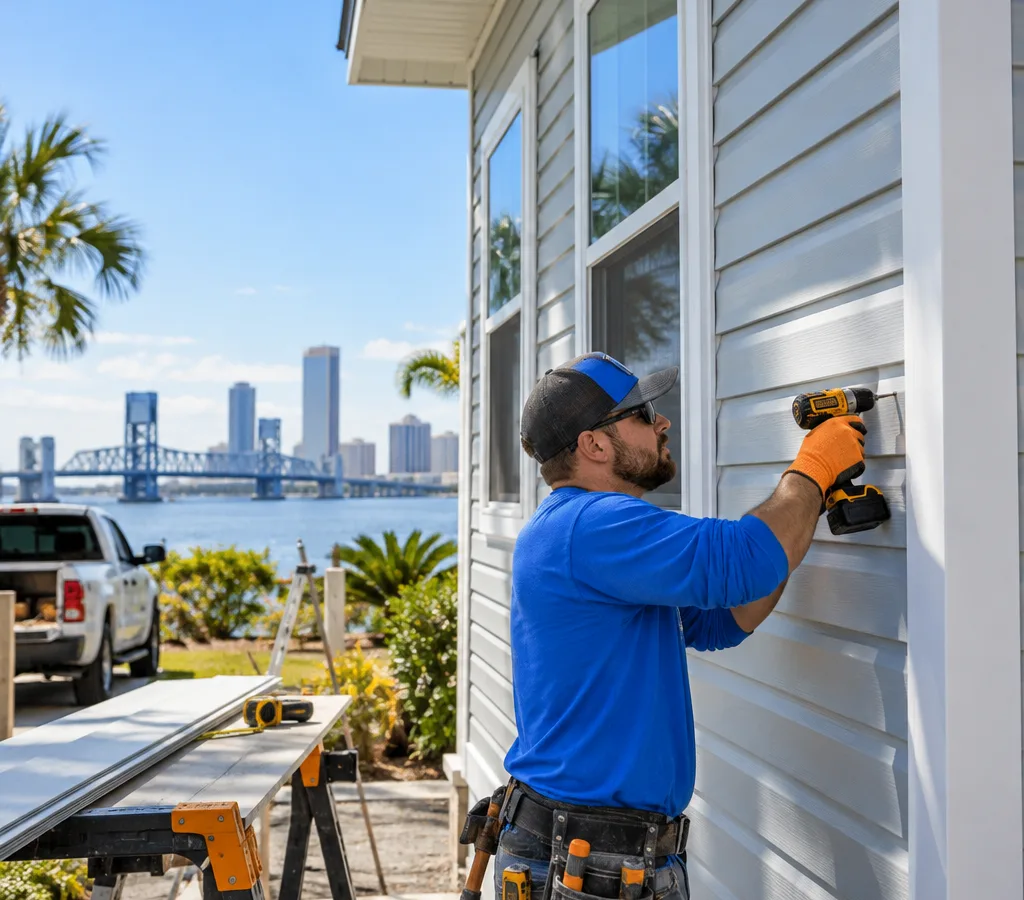
Vinyl Siding in Jacksonville, Florida
Get clean lines, tight seams, and trim details that hold up in heat, humidity, and storm season. Jacksonville Siding Contractors installs and replaces vinyl siding with a written scope, clear options, and an inspection-first plan.
Built for Northeast Florida
If you are searching for vinyl siding Jacksonville FL homeowners can count on, the goal is simple: siding that looks straight, sheds water, and stays put when the wind picks up.
Jacksonville's long humid stretches and heavy rain events put the whole wall system to work. Vinyl itself does not rot, but performance still depends on the basics being done right: properly integrated housewrap, correct flashing at windows and doors, vented soffit and intake/exhaust balance, and fastening that allows the panels to expand and contract without buckling.
We install and replace vinyl siding across Jacksonville, Florida with attention to the details that matter in the field: starter strip height, consistent course layout, clean J-channel work, and corners that stay tight. If you are comparing contractors, you can also get a sense of our approach and service area as a Jacksonville siding contractor.
Installation Details
Courses are leveled, staggered, and finished with consistent reveals. Corners, J-channel, and lineals are cut and locked so the trim looks crisp up close, not just from the street.
Vinyl is a cladding, not waterproofing. We pay close attention to housewrap tie-ins and flashing points at windows, doors, and penetrations so bulk water has a path out, not into the wall.
Panels are nailed to allow movement, not pinned tight. We follow manufacturer fastening patterns so the siding can expand and contract without oil-canning or loosening at seams.
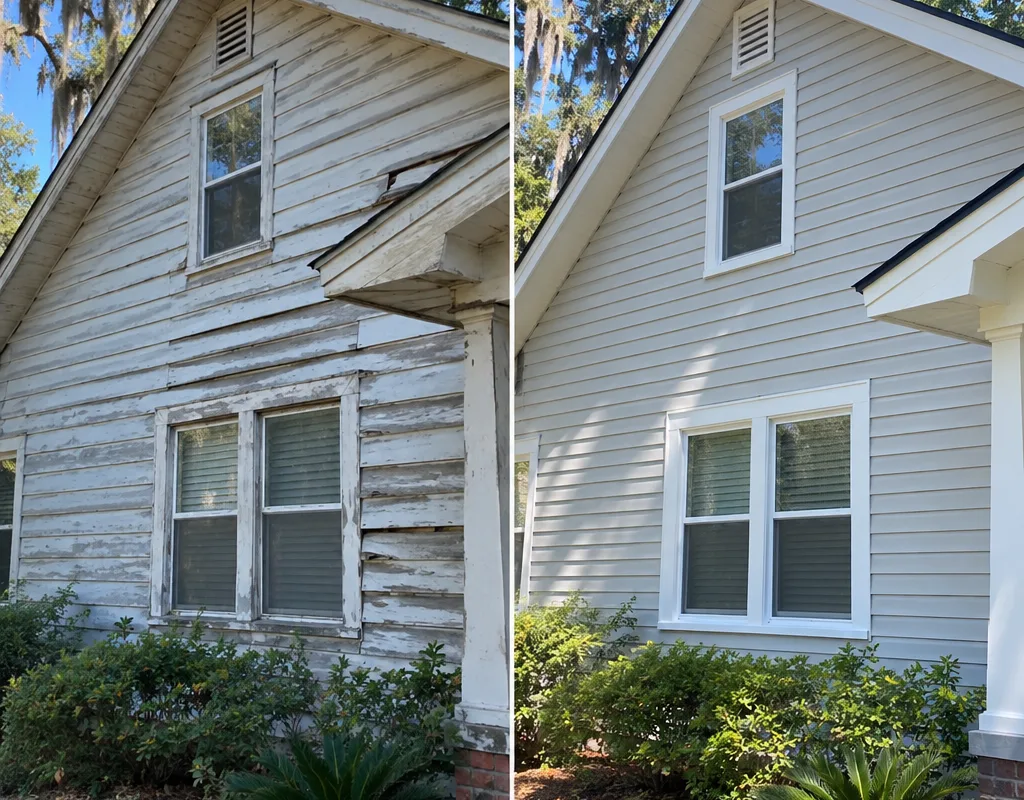
If only sections are damaged, we can discuss targeted replacement. When the underlayment or trim is failing, a full tear-off is usually the cleanest way to correct hidden issues.
You get a written scope that identifies what is being removed, what is being installed, and how edges and transitions are finished so there are no fuzzy assumptions.
Property Fit and Exposure
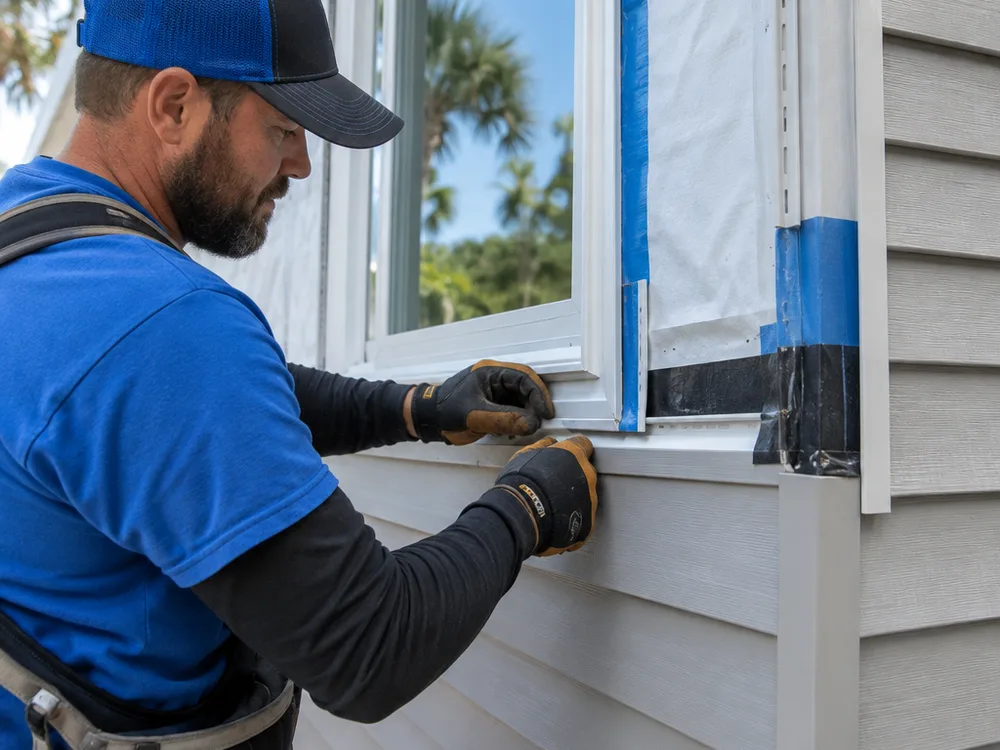
Vinyl siding is a practical option when you want a low-maintenance exterior refresh without the ongoing scraping and repainting that comes with older wood siding.
It can be a good fit for:
In established neighborhoods like Riverside and Avondale, we often see older homes with a mix of materials and lots of trim details around windows and eaves. Those details can still look sharp with vinyl, but only when the trim plan is mapped out first so the finished work does not look boxy or overbuilt.
In parts of Southside and along newer corridors, we also run into newer construction where a partial replacement is needed after storm damage or a remodel. Matching profile and color can be tricky, so we set expectations early and talk through the best-looking path before anything is ordered.
Inspection to Final Walkthrough
We look at the existing cladding, trim, soffit/fascia interfaces, and any obvious water entry points. We measure walls and openings and note obstacles like lights, vents, and hose bibs that need clean terminations.
We confirm the panel profile, color, trim pieces, and venting approach. The layout plan covers starter height, corner treatment, and how courses will land at windows and doors so the reveals are consistent.
If this is replacement work, we remove the old siding as required, inspect the sheathing, and address any localized repairs that are discovered. We integrate housewrap and flashing details before panels go on.
We install starter strips, corners, and panels with correct nailing and expansion gaps. Trim pieces are cut tight and aligned, penetrations are finished cleanly, and the site is cleaned up at the end of each day.
We walk the exterior with you, check seams, corners, and trim transitions, and confirm that vents and fixtures were reinstalled cleanly. Any punch-list items are handled promptly.
Project Pricing
Vinyl siding in Jacksonville typically ranges from about $6 to $12 per square foot installed, with many full-home projects landing around $12,000 to $30,000+ depending on size and detail. Small repairs or partial replacements can be much less, while multi-story homes with lots of corners, gables, and trim cost more.
Your final price depends on tear-off vs. overlay, sheathing condition, the panel grade and thickness, trim package including corners, J-channel, and lineals, access, and how many openings and penetrations must be detailed. The exact cost is confirmed after an on-site measurement and condition check so the scope matches the walls you actually have.
Project Details
Homeowner Questions
Both are possible, but full replacement is often the better option when the existing siding is uneven, damaged, or hiding moisture issues. Overlay can work when the wall plane is in good shape and the details at windows, doors, and trim can still be flashed correctly, but an inspection is the only way to choose confidently.
Most vinyl siding jobs take a few days to about two weeks depending on home size, number of stories, and how much trim detailing is involved. Tear-off, sheathing repairs, and a complex layout around many windows and penetrations are the biggest schedule drivers, and weather can slow exterior work in Jacksonville.
Quality vinyl siding holds up well when it is installed to manufacturer specs and detailed for water shedding and wind. The biggest real-world problems come from pinned-tight nailing, which can cause waves, and weak edge detailing at corners, windows, and soffit lines where wind and water find gaps.
Sometimes, but exact matches are not always possible because manufacturers discontinue profiles and colors, and sun exposure can fade older panels. We look for the closest profile and color match available, then recommend whether a localized repair, a full elevation replacement, or a more visible trim change will look best.
A good estimate spells out tear-off scope, underlayment or housewrap work, flashing approach at windows and doors, the specific panel and trim components, and how penetrations are finished. If an estimate is vague about wall prep or flashing, that is where problems usually show up later.
Not always, but it is common to address soffit, fascia, and venting during siding work because those edges tie directly into the new trim lines. If the existing components are deteriorated or poorly vented, correcting them during a vinyl siding project typically gives a cleaner finish and fewer call-backs.
Plan the Work Clearly
Tell us what you want to change and what problems you are seeing. Jacksonville Siding Contractors will inspect the exterior, confirm the right scope, and provide a written quote with the materials and finishing details spelled out.